

You're losing good candidates. Not because your salary isn't competitive, but because you're playing the hiring game with outdated rules.
Here's the reality: while everyone else is throwing money at the problem, smart business owners are using a different playbook. They're getting better candidates, faster, without breaking their budget.
The secret isn't one trick, it's three strategies working together that most businesses completely ignore.
Strategy #1: Make Flexibility Your Competitive Edge
Remote and hybrid work isn't just a nice-to-have anymore. It's your fastest path to beating the competition without spending extra money.
Companies with flexible work policies see 25% lower employee turnover and save an average of $11,000 per employee annually on real estate costs. That's money you can reinvest in your business instead of salary wars.
But here's what most business owners get wrong: they think flexibility means "work from anywhere, anytime." That's chaos, not strategy.
Smart flexibility looks like this:
- Core collaboration hours (say, 10 AM to 2 PM) when everyone's available
- Results-based performance metrics instead of clock-watching
- Clear communication protocols for remote teams
- Monthly in-person team meetings or quarterly retreats
When you eliminate geographic boundaries, you're no longer competing with just local businesses. You're accessing talent from markets where $60,000 goes much further than in major metropolitan areas.

Strategy #2: Speed Up Your Hiring Process
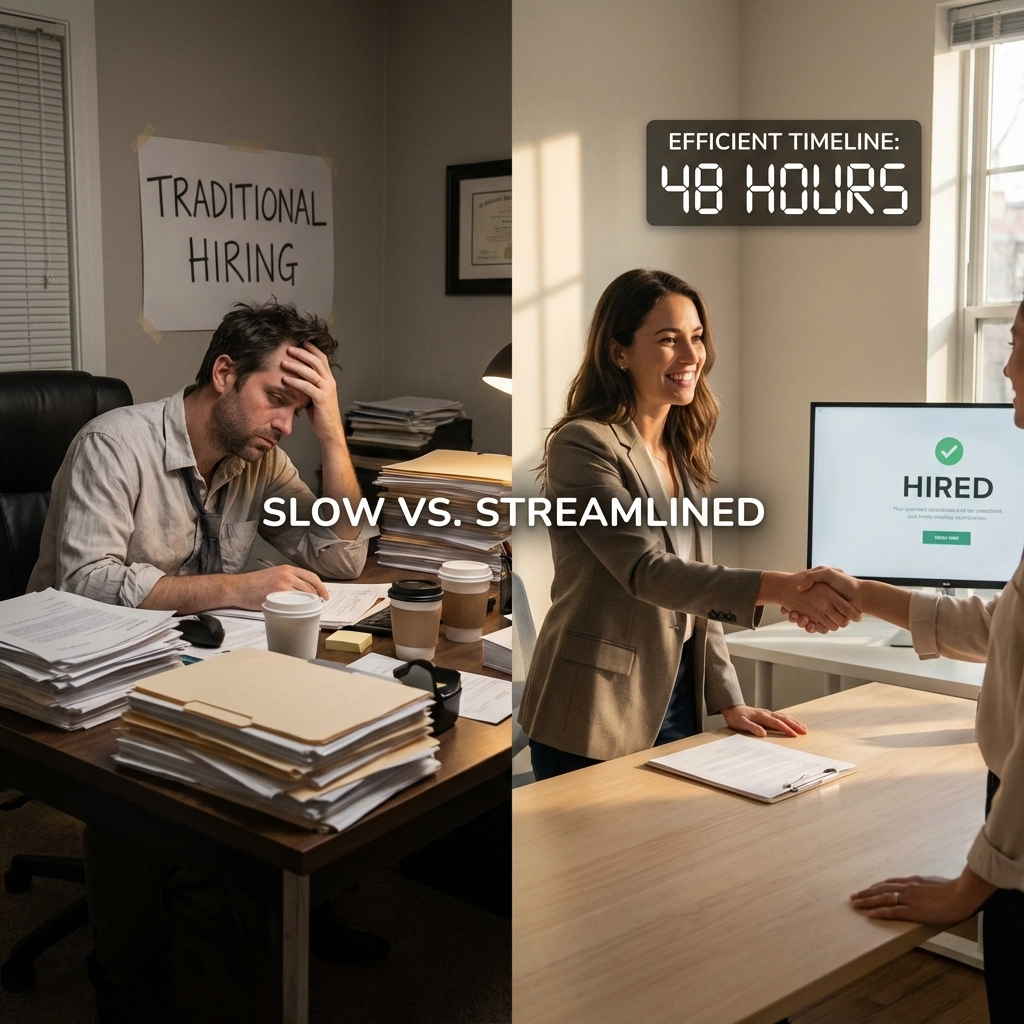
Your biggest competitor isn't offering higher salaries: they're offering faster decisions.
Federal agencies take an average of 98 days to hire someone. Private companies average 23 days. If you're taking longer than two weeks to make an offer, you're losing candidates to businesses that move faster.
Here's how to cut your hiring time in half:
Week 1: Application to first interview
- Use a simple application tracking system (many free options exist)
- Set up automated email responses acknowledging applications
- Schedule phone screens within 48 hours of application
Week 2: Interview to offer
- Combine interviews when possible (team interview instead of multiple one-on-ones)
- Make decisions within 24 hours of final interviews
- Have offer letters ready to send immediately
The fastest offer wins. Not the highest offer.
Strategy #3: Hire for Skills, Not Credentials
This is where you'll find your biggest advantage over larger competitors.
Big companies have rigid requirements: "Must have bachelor's degree, 5+ years experience, certification in X." You can be smarter.
Skills-based hiring expands your talent pool dramatically. Instead of fighting over the same pool of "perfectly qualified" candidates, you're discovering high-potential people everyone else overlooks.
How to implement skills-based hiring:
- Replace degree requirements with skills assessments
- Use portfolio reviews instead of just resume screens
- Ask candidates to complete a small, paid project during the interview process
- Focus interview questions on problem-solving, not past job titles
A motivated person with 80% of the skills you need often outperforms an overqualified candidate who's just collecting a paycheck.
The Supporting Tactics That Seal the Deal
These three core strategies work even better when you add these supporting elements:
Upgrade Your Employer Brand
Before candidates apply, they're researching your company online. Your LinkedIn page, Google reviews, and company website tell a story. Make sure it's a good one.
- Post regular updates about company wins and team achievements
- Respond to all reviews (positive and negative) professionally
- Update your website with clear information about company culture
- Share employee success stories on social media
Invest in Your Current Team
The best recruitment strategy is keeping the people you already have. When current employees stay longer, you hire less frequently.
- Create clear advancement paths for existing employees
- Offer training and certification programs
- Pair new hires with experienced mentors
- Regularly check in on job satisfaction and career goals
Streamline Your Onboarding
A great candidate experience doesn't end when they accept your offer. Poor onboarding loses 20% of new hires within the first 45 days.
First week priorities:
- Have their workspace and tools ready on day one
- Schedule meetings with key team members
- Assign a buddy for questions and guidance
- Set clear 30, 60, and 90-day goals
Making It Work for Your Business
Start with the strategy that addresses your biggest pain point:
If you're losing candidates at the offer stage: Focus on speeding up your hiring process. Most candidates who reject offers do so because they got a faster offer elsewhere.
If you're not getting enough qualified applications: Implement flexible work options and skills-based hiring to expand your talent pool.
If you're struggling with high turnover: Invest in employer branding and employee development programs to create a workplace people want to stay in.

The Real Cost of Doing Nothing
While you're debating whether these strategies are worth implementing, your competitors are already using them. Every month you delay is another month of:
- Paying premium prices for desperate hiring
- Losing productivity while positions stay unfilled
- Burning out existing team members with extra workload
- Missing growth opportunities because you can't scale your team
The hiring crisis isn't going anywhere. Supply and demand fundamentals haven't changed. But how you respond to those fundamentals can completely change your results.
Your Next Steps
Pick one strategy and implement it this week. Not next month. This week.
If you choose flexible work, update your job postings to highlight remote options and start drafting your remote work policy.
If you choose faster hiring, audit your current process and identify the biggest bottleneck. Fix that first.
If you choose skills-based hiring, rewrite one job posting to focus on what someone needs to do, not what degrees they need to have.
The businesses thriving in today's market aren't the ones with the biggest budgets. They're the ones who adapted fastest.
Your competitors are still trying to outspend the problem. While they're raising salary offers, you can be building a better, more sustainable hiring system that attracts top talent without breaking your budget.
The choice is yours. Keep playing by the old rules and paying premium prices, or implement these strategies and start winning the talent game on your terms.
Ready to build a hiring system that actually works? Contact our team to discuss how we can help streamline your recruitment process and build sustainable growth strategies for your business.